Is Audifort a scam?
On the recognised markers of a fraudulent offer, no — we found no evidence of deception in the published materials. It is a real product from an identifiable seller with published pricing and a documented refund route. What it lacks is evidence that it works, and a weak evidence base is a different failing from fraud.
What actually distinguishes a scam
The word gets used loosely, which is why the question is so rarely answered usefully. In consumer-protection terms a scam involves deception: taking money without delivering what was promised, misrepresenting material facts, hiding terms a buyer would have acted on, or making claims the seller knows to be false. US advertising rules require that health claims be truthful, not misleading, and substantiated before they are made.1
By that standard, "the evidence for this supplement is weak" is not a scam — it describes most of the supplement industry, entirely lawfully. "This page charged me twice and will not refund it" is. Collapsing the two makes the word useless precisely when someone needs it.
The markers, applied
Not found here
- No hidden recurring billing; the offer is presented as a one-time purchase.
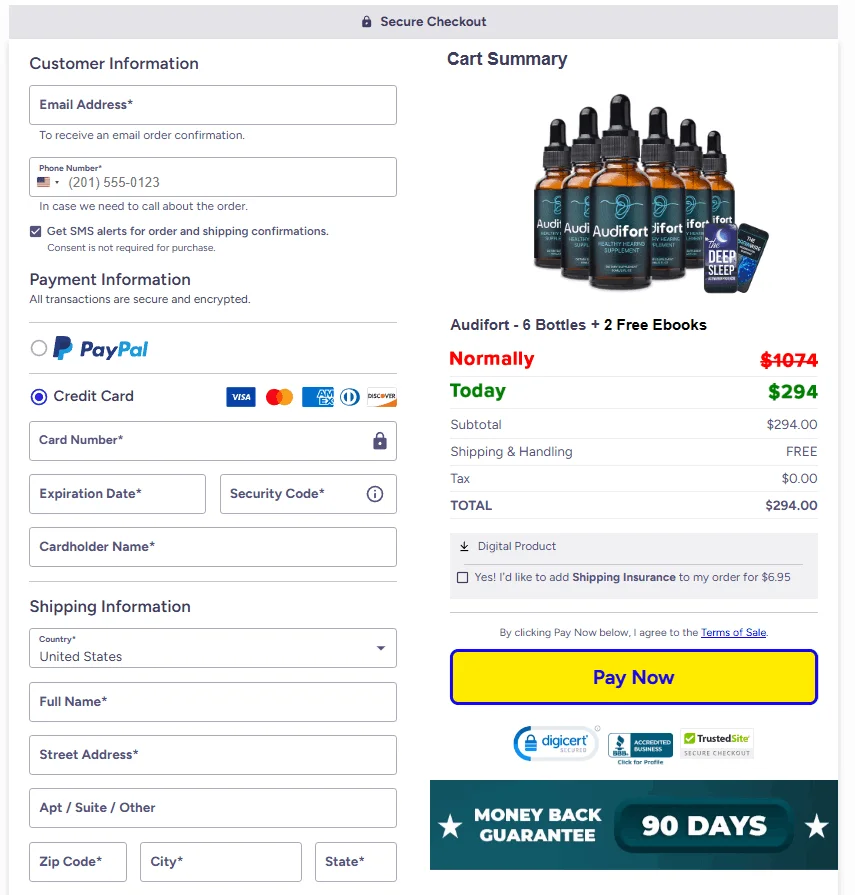
- No prices concealed until the payment step — tiers and totals are published in advance.
- No missing refund policy; a 90-day guarantee appears across three separate seller materials.
- No untraceable payment method; checkout runs through an established processor with its own dispute route.
- No claims to cure or treat a diagnosed condition on the product label itself.
- No pressure to buy before terms can be read.
Present, and fair to criticise
- Most of the formula is undisclosed — six ingredients named against a claimed twenty-plus.
- No Supplement Facts panel giving individual amounts is public.
- No published trial of the finished product.
- Certification claims that cannot be independently verified.
- Marketing around the product, though not always the label, leans on tinnitus in ways the evidence does not support.
The distinction that matters
Everything in the right-hand column is a genuine reason to be cautious, and none of it is evidence of fraud. A company can sell a legally compliant product with an undistinguished evidence base, disclose its price honestly, honour its refunds, and still be selling you something that does nothing. That is not deception; it is the ordinary operation of a lightly regulated market.
This is why we will not answer the headline question with a simple no and leave it there. "Not a scam" is a low bar. Clearing it tells you your money is unlikely to vanish. It tells you nothing about whether spending it accomplishes anything.
Where marketing in this category does cross lines
Some things genuinely do breach advertising standards, and they are worth naming because they recur. Describing a dietary supplement as "FDA approved" is inaccurate, since the agency does not approve supplements before sale.2 Fabricated review counts and fake live-purchase notifications misrepresent material facts about popularity. Stock photographs presented as identified physicians endorsing a product are false endorsements.
We removed all of those from this site, having inherited them. Their presence on a page does not prove a product is fraudulent, but it does tell you the operation is willing to assert things it cannot support — which is exactly the disposition you are trying to assess.
If you believe you have been misled
Contact the seller in writing first, with your order number, dates and amounts, and give a reasonable deadline. If that fails, raise a chargeback with your card issuer — the practical reason to pay by card rather than transfer. Deceptive advertising can be reported to the Federal Trade Commission,1 and adverse health reactions to the FDA.2 Keep dated screenshots of the terms as they appeared when you ordered; pages change, and a screenshot is worth more than a recollection.
The verdict, stated precisely
No evidence of deception, and no evidence of effect. Those two findings sit side by side without contradiction, and holding both is the accurate position. Treat the 90-day window as the real protection in this purchase, read its terms before ordering rather than after, and keep any hearing change in front of a clinician regardless — sudden or one-sided loss is treated as urgent in clinical guidance.3
Why "scam" gets applied so loosely online
Two commercial incentives push the word in opposite directions, and neither is interested in accuracy. commercial pages want to answer no as fast as possible, because a reassured reader clicks the buy button. Competitor content wants to answer yes, because a frightened reader looks for an alternative — which that page conveniently recommends underneath.
The result is a search results page where almost every entry has decided before examining anything. Noticing which way a page's money flows tells you most of what you need to know about how much weight to give its verdict, including this one: we earn commission on purchases made through our links, which is exactly why we have tried to be specific about what is absent rather than only about what is fine.
What weak evidence actually costs you
If it is not fraud, the reasonable follow-up is what the real risk is. It is not usually harm; it is opportunity cost. Money spent on an unproven supplement is money not spent on a hearing assessment, and time spent waiting to see whether drops help is time not spent on something with evidence behind it.
That matters more in this category than most, because some causes of hearing change are time-sensitive and because the interventions with the strongest evidence — testing, and properly treating identified loss — are unglamorous and easy to postpone. The honest risk in buying this product is not that you will be defrauded. It is that you will feel you have addressed something you have not.
Related Audifort pages