Tinnitus · Condition and positioning
Audifort for Tinnitus: Understanding the Claim and the Condition
People reach this product mainly through tinnitus. Before assessing whether a supplement is a sensible response, it helps to understand what tinnitus actually is — because the answer explains why this category has struggled for decades.
- Tinnitus is a symptom
- Usually generated centrally
- No cure claim is made here
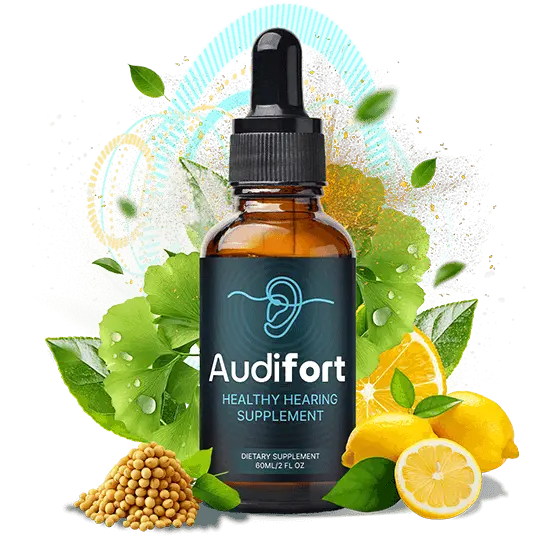
Is Audifort for tinnitus?
Audifort is marketed as general hearing and auditory wellness support, not as a tinnitus treatment, and no dietary supplement may lawfully be sold as one. Tinnitus is a symptom with many possible causes, most often generated by changes in central auditory processing rather than in the ear itself, which is why nutritional approaches have historically underperformed.
What tinnitus is
Tinnitus is the perception of sound with no external source — ringing, hissing, buzzing, humming or a tone. It is extremely common, affecting a substantial minority of adults at some point, and for most people it is intermittent and unobtrusive. For a smaller group it is persistent and genuinely distressing.
The critical point, and the one most supplement marketing skips, is that tinnitus is a symptom rather than a disease. It is the auditory equivalent of pain: a signal that something in the system has changed, not a diagnosis in itself. Causes range from noise exposure and age-related hearing loss to earwax, medication side effects, jaw problems, blood pressure changes and, rarely, structural issues that need imaging.
Why it is not really an ear problem
The intuitive model — something is ringing inside the ear — turns out to be wrong for most people. The prevailing scientific account is that reduced input from a damaged cochlea causes the central auditory system to increase its own gain, rather as an amplifier turned up in a quiet room begins to hiss. That compensatory over-activity is what gets perceived as sound.13
This central-gain model has been developed considerably in recent years and now frames most serious tinnitus research.2 It also explains something otherwise puzzling: why cutting the auditory nerve does not reliably abolish tinnitus. If the signal were coming from the ear, it would. It does not, because by then the generator has moved inland.
The practical consequence matters for anyone considering a supplement. An oral product circulating through the bloodstream is a peripheral intervention aimed at a largely central phenomenon. That is not an argument that it cannot help — central and peripheral systems are connected — but it is a reason the mechanism is less direct than marketing usually implies.
How Audifort is actually positioned
The product is described as a healthy hearing supplement offering general support for hearing and auditory wellness. Careful reading of the seller's own language shows it stops short of claiming to treat tinnitus, and it has to: US supplement law permits structure and function statements but forbids disease claims. Anything asserting that a supplement treats, cures or eliminates tinnitus has crossed a legal line, not just an evidential one.
What draws tinnitus searches toward products like this is the surrounding marketing ecosystem rather than the label — commercial pages, forum posts and video ads that use the word freely even where the manufacturer does not. Reading the label rather than the advertising is the single most clarifying thing you can do here.
What the ingredients have to do with tinnitus
Of the six disclosed ingredients, one has a genuine conceptual link. GABA is the principal inhibitory neurotransmitter of the central nervous system, and reduced central inhibition is precisely what the gain model implicates.3 That is a real connection at the level of theory.
The theory does not survive the journey into a bottle intact. The relevant GABA signalling happens inside the brain, and how much orally ingested GABA crosses the blood–brain barrier remains genuinely unresolved.4 The remaining ingredients relate to tinnitus only indirectly: grape seed and green tea through vascular and antioxidant effects measured in peripheral arteries,56 which matter because the cochlea depends on a fragile microcirculation,7 and gymnema through glycaemic markers.8 None was studied for tinnitus.
Where the evidence stops
No published clinical trial has tested Audifort for tinnitus or anything else. Beyond this product, the wider record is not encouraging: Cochrane reviewed Ginkgo biloba, the most studied ingredient in this space, and found the evidence too uncertain to establish a benefit for tinnitus loudness or severity.9 A randomised, placebo-controlled trial of antioxidant supplementation in people with tinnitus exists,10 but it tested a different preparation and cannot be read across.
When tinnitus needs a clinician rather than a supplement
See a doctor promptly for any of these
- Tinnitus in one ear only, or markedly worse on one side.
- Tinnitus that pulses in time with your heartbeat.
- Sudden hearing loss over hours or days — treated as urgent in clinical guidance, where outcomes depend heavily on how quickly treatment starts.11
- Tinnitus with vertigo, facial weakness, numbness or severe headache.
- Ear pain or discharge alongside the noise.
- Tinnitus causing significant distress, sleep disruption or low mood.
None of these are reasons for alarm in themselves, but all of them are reasons for an examination rather than an order. A supplement bought instead of that appointment is the wrong trade, and buying one is never a reason to postpone it.
Related Audifort pages
- whether it works for tinnitus — the efficacy question answered directly
- tinnitus reviews and testimonials — why personal accounts are especially unreliable here
- a review of the tinnitus positioning — ingredient by ingredient against tinnitus specifically
- the main Audifort page — what the product is and how it is described
Frequently asked questions
No. It is a dietary supplement marketed as general hearing and auditory wellness support. No dietary supplement may lawfully be sold as a treatment for tinnitus, and no published trial has tested this product for it.
It is a symptom rather than a disease, with many possible causes including noise exposure, age-related hearing loss, earwax, medication side effects, jaw problems and blood pressure changes. Most persistent tinnitus is thought to be generated by changes in central auditory processing after reduced input from the cochlea.
GABA has a genuine conceptual link, since reduced central inhibition is what the leading model of tinnitus implicates. But that signalling happens inside the brain, and how much orally taken GABA crosses the blood-brain barrier remains unresolved.
No supplement has been shown to reliably reduce or stop tinnitus. Cochrane reviewed Ginkgo biloba, the most studied ingredient in this category, and found the evidence too uncertain to establish a benefit.
Promptly if it affects one ear only, pulses with your heartbeat, comes with sudden hearing loss, vertigo, facial weakness or ear discharge, or if it is causing significant distress or sleep problems. Sudden hearing loss in particular is treated as urgent.
References
Each verified against its PubMed record or issuing body. The complete source list is on the main Audifort guide.
- Shore SE, et al. Maladaptive plasticity in tinnitus: triggers, mechanisms and treatment. Nat Rev Neurol. 2016. PMID 26868680
- Langguth B, et al. Tinnitus: clinical insights in its pathophysiology. J Assoc Res Otolaryngol. 2024. PMID 38532055
- Salvi R, et al. Inner hair cell loss disrupts hearing and enhances central auditory gain. Front Neurosci. 2016. PMID 28149271
- Lu WY. Supplementation of gamma-aminobutyric acid as a functional nutrient. Nutrients. 2026. PMID 42514458
- Foshati S, et al. Grape seed extract, flow-mediated dilation and blood pressure. Pharmacol Res. 2022. PMID 34798267
- Ras RT, et al. Tea consumption enhances endothelial-dependent vasodilation. PLoS One. 2011. PMID 21394199
- Shi X. Physiopathology of the cochlear microcirculation. Hear Res. 2011. PMID 21875658
- Devangan S, et al. Gymnema sylvestre and glycaemic control in type 2 diabetes. Phytother Res. 2021. PMID 34467577
- Sereda M, et al. Ginkgo biloba for tinnitus. Cochrane Database Syst Rev. 2022. PMID 36383762
- Petridou AI, et al. Antioxidant supplementation in patients with tinnitus: a randomised, double-blind, placebo-controlled trial. Nutrients. 2019. PMID 31842394
- Chandrasekhar SS, et al. Clinical practice guideline: sudden hearing loss (update). Otolaryngol Head Neck Surg. 2019. PMID 31369359