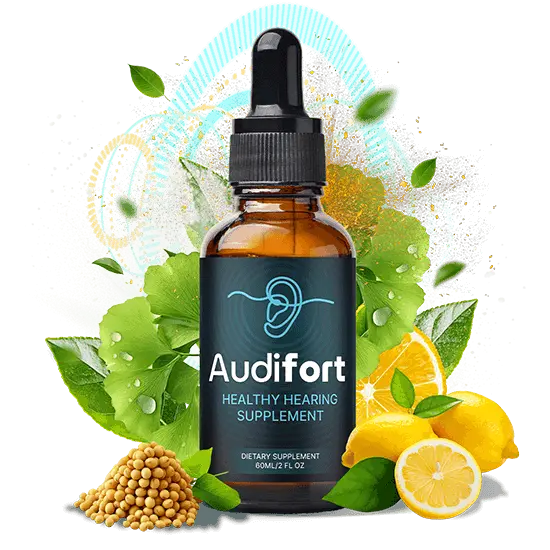
Is Audifort a good fit for tinnitus specifically?
On the disclosed formula, the fit is weak. One of the six named ingredients has a genuine conceptual link to how tinnitus is generated, and even that link depends on an unresolved question about oral absorption. The rest relate to circulation and antioxidant status, which matter for hearing generally but were never studied for tinnitus.
What the marketing actually implies
The manufacturer's own label language is general: healthy hearing support, auditory wellness. It does not claim to treat tinnitus, and legally it cannot. But the surrounding advertising ecosystem — commercial pages, social ads, video funnels — leans heavily on ringing in the ears, because that is what drives search volume and urgency in this category.
So there is a gap between what the product says about itself and what the market around it says on its behalf. Assessing the tinnitus proposition means assessing that implied claim, since it is the one bringing most people to the page.
Ingredient by ingredient, against tinnitus
GABA
The one plausible link
Reduced central inhibition is what the leading model of tinnitus implicates: less input from the cochlea, more gain in the auditory system, perceived as sound.1 GABA is the main inhibitory neurotransmitter, so the theory connects. The problem is delivery — that signalling is inside the brain, and how much oral GABA crosses the blood–brain barrier is unresolved.2 A real mechanism with an unproven route to it.
Grape seed & green tea
Vascular and antioxidant, not auditory
Both have credible human data — grape seed on flow-mediated dilation and blood pressure,3 tea on endothelial function.4 Relevant in principle, because the cochlea runs on a fine microcirculation with no backup.5 But those effects were measured in peripheral arteries in cardiometabolic populations, and no tinnitus outcome was recorded in any of them.
Gymnema sylvestre
Metabolic, and an interaction signal
Its documented research concerns glycaemic markers in type 2 diabetes.6 There is an indirect argument — metabolic health relates to hearing health over time — but it is several steps removed from ringing in the ears. Its more immediate relevance is that it may add to glucose-lowering medication.
Capsicum & maca
No tinnitus rationale
Both are present on general energy and circulation positioning. Neither has human research connecting it to tinnitus, hearing thresholds or auditory function. On a tinnitus-focused reading of this formula, they are filler.
Adding it up
One ingredient of six has a defensible theoretical connection to the mechanism most researchers believe generates tinnitus, and that connection is bottlenecked by an unresolved absorption question. Two more support a general vascular case for ear health that was never tested against tinnitus. Two have no tinnitus rationale at all. The sixth — the unnamed remainder of a claimed twenty-plus ingredients — cannot be assessed, because it is not disclosed.
That is a thin basis for a tinnitus purchase, and it is thinner still once you remember that no amount of any of it is published. Grape seed's vascular findings came from defined doses; a formula can contain the same ingredient at a fraction of that and list it identically.
What the category record suggests
It is worth calibrating against the best case rather than this one. Ginkgo biloba has been studied for tinnitus far more than anything in this bottle, and Cochrane's 2022 review still found the evidence too uncertain to establish a benefit.7 A placebo-controlled trial of antioxidant supplementation in people with tinnitus exists,8 testing a different preparation. If the most-studied option in the category has not cleared the bar, an untested blend should not be expected to.
Realistic expectations
If you try it, the honest framing is an experiment with an uncertain outcome rather than a treatment. Expect nothing in particular; note the 90-day refund window and diarise it at the point of purchase; keep a daily record so that whatever you conclude rests on something better than memory.
And keep the alternatives in view, because they are not nothing. Approaches that act on the central side of the problem — sound therapy, cognitive behavioural approaches, and properly fitted hearing aids where hearing loss is present — form the evidence-based core of tinnitus management. A large randomised trial found benefit from hearing intervention in older adults with hearing loss.9 That is where the strongest evidence in this whole area sits, and it is not in a bottle.
What the price buys, in context
Cost is part of any review, and it reads differently once the evidence position is clear. The published offer runs from $79 per bottle at the smallest package to $49 at the largest, with a 90-day money-back guarantee stated across the seller's materials. That is unremarkable for the category.
What is worth weighing is the comparison. A hearing assessment is often free or low cost, produces an audiogram that is genuinely diagnostic, and may identify something treatable. If hearing loss is found, a properly fitted hearing aid has real evidence behind it for reducing tinnitus intrusiveness. Set against a six-bottle order of an untested blend, that is a markedly better use of the same money for most people with tinnitus.
Who this is and is not for
If you have had your hearing checked, know what is causing your tinnitus, are already using whatever your clinician recommended, and simply want to add general nutritional support with a refund window attached — this is a reasonable thing to try, on the understanding that nothing about it is proven.
If you have not had it assessed, if the noise is one-sided or pulsing, if it started suddenly, or if it is affecting your sleep or mood, then a supplement is the wrong first move regardless of formula. Those are all reasons for an appointment, and some of them are urgent.
Related Audifort pages