Balanced assessment · Verified ledger
Audifort Reviews vs Complaints: What Actually Checks Out
Praise and criticism about this product both contain a mix of verifiable fact and unverifiable assertion. This page sorts them into three columns: what checks out, what does not, and what nobody can establish either way.
- 6 claims verified
- 5 gaps documented
- Efficacy: unverifiable
What do Audifort reviews and complaints establish?
Together they establish the shape of the offer and almost nothing about the formula. The verifiable positives concern pricing transparency, refund terms and partial ingredient disclosure. The verifiable negatives concern what is not published. Everything about whether it works sits in a third column that neither side can fill.
Column one: what checks out
These are claims made in favourable coverage that we were able to confirm against the seller's own materials, cross-checking between the pricing page, the checkout and the product label imagery.
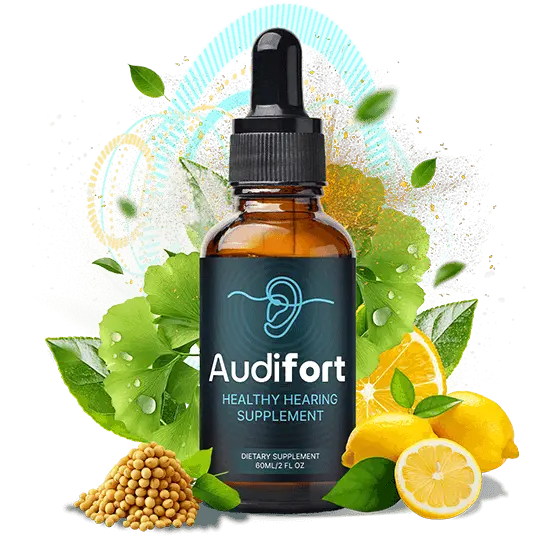
- The format is as described. Liquid drops, 60 ml / 2 fl oz amber glass bottle, confirmed on label imagery.
- Pricing is published before checkout. Three tiers, from $79 per bottle down to $49, with totals shown rather than revealed at the payment step.
- The offer is internally consistent. Prices, package contents and bonuses agree between the pricing page and the checkout summary.
- The 90-day guarantee is stated consistently across three separate seller materials rather than appearing in one place only.
- Two bonus guides genuinely attach to the three- and six-bottle tiers, and are absent from the smallest package as stated.
- Six ingredients are named publicly, which is more disclosure than several competing products offer.
Column two: what does not check out
These are the documented gaps — each one a legitimate criticism that requires no invented customer to support it.
- No public Supplement Facts panel. Individual amounts are unpublished, so the formula cannot be compared against research doses.
- Most of the formula is unnamed. Six ingredients against a claimed twenty-plus leaves the majority unlisted and unavailable for allergen checking.
- Serving instructions conflict. References to capsules, to droppers twice daily and to roughly fifteen drops all circulate, and none reconciles against a verified label.
- No finished-product trial. Nothing published tests what is actually in the bottle.
- Certification is unverifiable. Manufacturing and quality claims could not be independently confirmed.
Column three: what neither side can settle
This is the largest column and the one both enthusiasts and detractors write as though it were settled.
Whether the formula affects hearing. Whether it affects tinnitus. How long it would take. Whether one person's improvement or another's disappointment reflects the product at all. None of these is answerable from the available record, because answering them requires a randomised, placebo-controlled trial of the finished product and none has been published.
A positive account and a negative one are equally uninformative here, and for the same reason: neither has a control group. Symptoms fluctuate, expectation shapes subjective report, and people rarely change one thing at a time.
The claims we removed from this site
Being specific about our own corrections is part of an honest ledger. Earlier versions of these pages carried an "FDA Approved" badge — a status no dietary supplement can hold. A "GMP Certified" claim we could not verify. A photograph of a named physician presented as an endorser. A graphic asserting a rating "based on 127,000 reviews" with no source. Scripted pop-ups generating random names and cities as fake recent purchases, and a fake live-viewer counter. A stated 60-day guarantee contradicting the seller's own 90-day terms.
All are gone. We mention them because the same artefacts appear across this category, and recognising them is more useful than any verdict we could offer.
Reading the balance
Set out plainly, the ledger says: this is a transparently priced offer with a documented refund route and partial ingredient disclosure, sold on an evidence base that does not exist for the finished product. Both halves are true simultaneously, and pages that report only one half are not being careless — they are selecting.
What follows practically is that the 90-day window is the substantive protection in this purchase. Read its terms on the checkout page before ordering, note the deadline in a calendar on the day, and treat the trial as an experiment you can exit rather than a decision you are stuck with.
How to weigh the three columns
A ledger is only useful if you know which entries carry weight. The verifiable positives all concern the transaction: what you will pay, what arrives, and what happens if you want your money back. Those are the things most likely to go wrong in an online purchase, and on those this offer holds up well.
The verifiable negatives all concern information: what the seller has chosen not to publish. None of them means the product is harmful or the seller dishonest. They mean you are buying with less information than you would have for, say, a multivitamin from a pharmacy, and that the usual way of checking a formula against research is closed to you.
The third column — effectiveness — is the one people actually care about, and it is empty for everyone. That asymmetry is worth sitting with. The parts of this purchase you can verify are the parts that matter least to your reason for buying.
Safety, which neither column usually covers
One thing rarely appears in either praise or criticism, and it deserves a line. Two disclosed ingredients carry checkable interaction signals: gymnema sylvestre has meta-analysed effects on glycaemic markers, which is relevant alongside glucose-lowering medication, and grape seed extract has antiplatelet potential worth raising before surgery or with anticoagulants. Concentrated green tea extract has been associated with rare liver injury at high intakes.
Because most of the formula is unnamed, anyone with allergies or on multiple medications has a genuine reason to obtain the full panel before taking it — a practical concern that sits outside the reviews-versus-complaints framing entirely.
Related Audifort pages
- a decision framework for mixed feedback — how to weigh conflicting accounts before buying
- complaints in detail — which categories matter and how to verify one
- how Audifort reviews work — who writes them and what they can verify
- the legitimacy check — what can be confirmed about the seller and offer
Frequently asked questions
The verifiable facts: the format, the package pricing, the internal consistency of the offer, the 90-day guarantee and the fact that six ingredients are named. They disagree on effectiveness, which neither side can establish.
No public Supplement Facts panel, most of the formula unnamed, contradictory serving instructions circulating online, no published trial of the finished product, and no independently verifiable certification.
Pricing published before checkout, an internally consistent offer, a 90-day money-back guarantee stated across three separate seller materials, bonuses that genuinely attach to the stated tiers, and six ingredients disclosed by name.
Because neither has a control group. Symptoms fluctuate naturally, expectation shapes subjective reporting, and people rarely change one thing at a time. Only a randomised placebo-controlled trial of the finished product could settle it, and none exists.
An FDA Approved badge, an unverified GMP Certified claim, a photograph of a named physician presented as an endorser, a 127,000-review rating graphic with no source, fake purchase pop-ups, a fake viewer counter, and a 60-day guarantee that contradicted the seller’s own 90-day terms.
Further reading
Background sources on hearing physiology and supplement safety, each verified against its PubMed record. The complete source list is on the main Audifort guide.
- Sereda M, et al. Ginkgo biloba for tinnitus. Cochrane Database Syst Rev. 2022. PMID 36383762
- Souza MEDCA, et al. Antioxidant supplementation and auditory threshold in sensorineural hearing loss. Braz J Otorhinolaryngol. 2018. PMID 28888754
- US Food and Drug Administration — information for consumers on dietary supplements. fda.gov