Current assessment · Reviewed August 2026
Audifort Reviews 2026: What Is Current and What Changed
Year-labelled reviews are usually last year's text with the date swapped. This one records what we actually rechecked in August 2026, what moved since our earlier assessment, and what did not move at all.
- Reviewed Aug 2026
- Evidence: unchanged
- Offer: rechecked
What is the current status of Audifort in 2026?
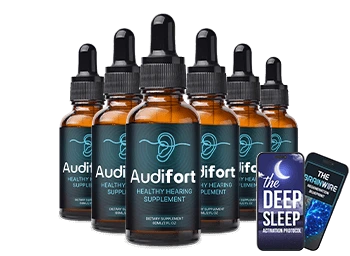
As of August 2026 the product remains a liquid dietary supplement with six publicly named ingredients, a 90-day money-back guarantee and no published clinical trial of the finished formula. The offer structure was rechecked this month. The evidence position has not changed.
What we rechecked, and when
This page was reviewed in August 2026. Rechecking meant re-reading the seller's pricing page, checkout and label imagery, re-verifying every scientific citation against its PubMed record, and re-running our own link and claim audit across the site.
We say that because "2026" in a title is usually decoration. A year label is only meaningful if it tells you when someone last looked, and what they found when they did.
Product details: unchanged
- Format: liquid drops, 60 ml / 2 fl oz amber glass dropper bottle.
- Category: dietary supplement, described on the label as a healthy hearing supplement.
- Disclosed ingredients: Capsicum Annuum, Maca Root, Gymnema Sylvestre, Grape Seed, GABA, Green Tea — six, against a stated twenty-plus total.
- Supplement Facts panel: still not published. Individual amounts remain unknown.
- Serving instructions: still inconsistent across sources, so we continue to publish none.
The current offer
Three packages, as published at the time of review: two bottles at $79 each with shipping charged separately, three bottles at $59 each with free US shipping, and six bottles at $49 each with free US shipping. Two digital bonus guides attach to the three- and six-bottle tiers only. A 90-day money-back guarantee is stated across the pricing page, the checkout and the guarantee badge.
Prices in this category change without notice, so treat these figures as a description of the structure rather than a quotation. The checkout page on the day you order is the only authority on what you will pay.
What changed since our earlier assessment
Nothing on the manufacturer's side that we could detect. What changed was our own coverage, and it is worth recording. We removed an "FDA Approved" badge, since no dietary supplement holds that status. We removed a "GMP Certified" claim we could not independently verify, and a photograph of a named physician presented as an endorser.
We also removed a graphic asserting a rating "based on 127,000 reviews" with no source, scripted pop-ups generating random names and cities as fake recent purchases, and a live-viewer counter driven by a hardcoded array. And we corrected a stated 60-day guarantee that contradicted the seller's own 90-day terms in three separate materials.
Evidence status: still no finished-product trial
We searched again and found no published clinical trial of Audifort. The ingredient literature is as it was: grape seed extract retains meta-analysed effects on flow-mediated dilation and blood pressure,1 tea on endothelial function,2 gymnema on glycaemic markers.3 All measured outcomes other than hearing.
The category context is unchanged too. Cochrane's review of Ginkgo biloba, the most studied ingredient in hearing supplements, still finds the evidence too uncertain to establish a benefit for tinnitus.4 Antioxidant supplementation in sensorineural hearing loss remains mixed and modest in meta-analysis.5 The 2024 clinical practice guideline on age-related hearing loss continues to point toward assessment and proper treatment rather than nutrition.6
Our 2026 methodology
Product facts come from the seller's own materials, cross-checked between at least two of the pricing page, checkout and label imagery, and are labelled as seller statements. Scientific claims are checked against PubMed records before publication; we do not cite a paper we have not confirmed exists and supports the point. Where something cannot be verified we report the gap rather than filling it. We hold no medical credential and do not claim one.
What we will recheck next
Whether a Supplement Facts panel is ever published, since that single document would change how much of this product can be assessed. Whether any trial of the finished formula appears. Whether the guarantee period or package structure shifts. And whether third-party certification becomes verifiable on a certifier's own directory rather than asserted on a sales page.
Until any of those move, the assessment stands where it did: a plausible formula, a transparently structured offer, a documented refund route, and no evidence about the product itself.
What a year label should and should not mean
Dated review titles are among the most abused conventions in this category, because appending the current year is free and implies work that may not have happened. A page written in 2024 and relabelled twice reads identically to one genuinely rechecked last week.
Two things make a date meaningful. The first is specificity about what was rechecked — not "updated for 2026" but which sources were re-read and what was found. The second is a willingness to report that nothing changed, which is the outcome a marketing-led page cannot admit because it makes the update look pointless. Most of what we rechecked this month had not moved, and saying so is the point.
Reading any 2026 supplement review critically
- Does it name what changed? A genuine update identifies specifics: a price, a package, a formula, a policy.
- Does it cite anything published recently? A review claiming fresh evidence should be able to point at it.
- Does it admit continuity? Products rarely change much year to year, and an honest update says so.
- Does the price match the checkout today? The fastest test available — open the seller's page and compare.
- Does it still describe the format correctly? Pages recycled from older copy often describe this liquid product as capsules, which reveals how carefully it was refreshed.
Related Audifort pages
- the full analytical review — formula, evidence, safety and verdict
- how to read Audifort reviews — what a review can and cannot establish
- current purchase information — packages, pricing and the refund window
- the efficacy question — what the evidence hierarchy shows
Frequently asked questions
Nothing on the manufacturer side that we could detect when rechecking in August 2026. The format, disclosed ingredients, package structure and 90-day guarantee are as before, and no Supplement Facts panel has been published.
At the time of review: two bottles at $79 each with shipping separate, three at $59 each with free US shipping, and six at $49 each with free US shipping. Prices change without notice, so confirm on the checkout page before ordering.
No. We searched again in August 2026 and found no published clinical trial of the finished product. The ingredient literature remains as it was, with outcomes measured for vascular and metabolic endpoints rather than hearing.
The year label records when we actually rechecked. That meant re-reading the seller pricing page, checkout and label imagery, re-verifying every citation against its PubMed record, and re-running our claim and link audit.
A published Supplement Facts panel giving individual amounts, a clinical trial of the finished formula, or third-party certification verifiable on a certifier directory rather than asserted on a sales page.
References
Each verified against its PubMed record or issuing body. The complete source list is on the main Audifort guide.
- Foshati S, et al. Grape seed extract, flow-mediated dilation and blood pressure. Pharmacol Res. 2022. PMID 34798267
- Ras RT, et al. Tea consumption enhances endothelial-dependent vasodilation. PLoS One. 2011. PMID 21394199
- Devangan S, et al. Gymnema sylvestre and glycaemic control in type 2 diabetes. Phytother Res. 2021. PMID 34467577
- Sereda M, et al. Ginkgo biloba for tinnitus. Cochrane Database Syst Rev. 2022. PMID 36383762
- Souza MEDCA, et al. Antioxidant supplementation and auditory threshold in sensorineural hearing loss. Braz J Otorhinolaryngol. 2018. PMID 28888754
- Tsai Do BS, et al. Clinical practice guideline: age-related hearing loss. Otolaryngol Head Neck Surg. 2024. PMID 38687845