Format review · Updated August 2026
Audifort Drops Review: Evaluating the Liquid Format
Most reviews of this product assess the formula. This one assesses the delivery — whether taking a hearing supplement as drops is an advantage, a marketing flourish or a genuine drawback, and who the format actually suits.
- Verdict: mixed
- Best for pill-averse users
- Weak on dose precision
Are Audifort drops worth choosing over a capsule?
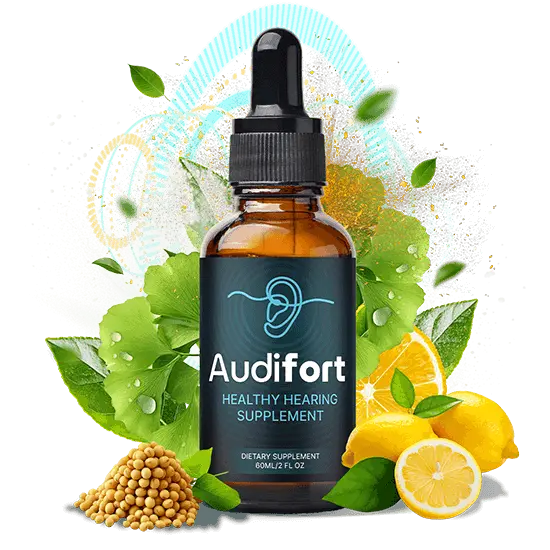
The format is a genuine convenience for people who dislike capsules, and a genuine weakness for anyone who wants a repeatable dose. A hand-filled pipette cannot match a factory-filled capsule for consistency, and because per-ingredient amounts are not published, the actual intake per serving is unknown twice over.
Where the format earns its place
Difficulty swallowing pills is common and under-discussed, and it rises with age — which matters here, because the audience for a hearing supplement skews older. For someone who has abandoned capsule products because taking them is unpleasant, a liquid removes the obstacle entirely. That is not a trivial benefit: a supplement does nothing whatsoever if the bottle sits unopened.
The format also allows flexibility. If a labelled serving disagrees with you, a liquid can be reduced in a way a capsule cannot without splitting it. And the ritual of measuring something out tends to be more memorable than swallowing a pill, which may help with the consistency any nutritional product depends on.
Where it falls down
Dose precision is the real cost, and it compounds an existing problem. A pipette filled by hand delivers a different volume each time depending on how far the bulb is squeezed and how the tube is held. That variation would be tolerable if you knew what was in the liquid, because you could at least reason about the range. You do not: no Supplement Facts panel giving individual amounts was available to us.
So there are two unknowns stacked on each other. You do not know the concentration, and you do not reliably repeat the volume. Anyone who wants to compare what they are taking against the amounts used in published research — the grape seed trials, for instance, used defined doses1 — cannot do so from either direction.
The absorption argument, examined
Liquid supplements are routinely marketed on faster absorption. The underlying physiology is real enough: a liquid skips the disintegration step a capsule requires, so its contents reach the gut sooner. Sublingual delivery, where a substance crosses the mucous membrane under the tongue, can bypass first-pass liver metabolism for certain small molecules.
Two caveats hollow out the claim as a purchasing reason. First, sublingual absorption is selective — it works for some compounds and not others, and holding a botanical blend under the tongue does not guarantee any of it takes that route. Second, and more decisively, speed is not potency. Absorbing an unknown quantity slightly faster is not a benefit you can measure or feel. No study compares this product to a capsule equivalent, because no capsule equivalent exists.
Practicality in daily use
A dropper bottle is less portable than a blister pack. It is glass, it can leak if the cap is not seated properly, and it is awkward to take to work or on a flight where liquid rules apply. Against that, a 60 ml bottle is small, and the amber glass is more pleasant to handle than a plastic tub.
Taste is the variable we cannot assess for you, because we have not tasted it and the seller does not describe the flavour. Botanical extracts, particularly capsaicin from capsicum, are not usually neutral. If you are sensitive to strong flavours, that is a genuine unknown you are buying into — and one more reason the refund window matters.
Cost, and what the format changes
The liquid format does not make this product cheaper. Package pricing runs from $79 per bottle at the smallest tier down to $49 per bottle at the largest, which sits in the normal range for a direct-to-consumer hearing supplement regardless of delivery. What the format does change is what you are storing: six bottles of liquid held for months has more stability risk than six bottles of capsules.
Verdict on the drops
Format strengths
- Removes the pill-swallowing barrier entirely
- Amber glass protects light-sensitive botanicals
- Serving can be adjusted downward if needed
- Small 60 ml bottle, easy to store at home
Format weaknesses
- Hand-filled dosing varies between servings
- Concentration per ingredient is not published
- Absorption advantage is asserted, not demonstrated
- Glass bottle is less portable and can leak
- Taste is undisclosed and botanicals are rarely neutral
On balance: choose the drops because capsules do not work for you, not because the liquid is claimed to work better. Those are different reasons, and only the first one holds up.
What we could not assess about the drops
Being clear about the limits of a format review matters as much as the findings. We have not measured the actual volume a full pipette delivers, because that varies by user and by bottle. We have not tasted the product, so the palatability question stays open. We cannot confirm the carrier liquid — glycerine, alcohol and water bases behave differently in terms of taste, shelf life and suitability for people avoiding alcohol, and none is specified publicly.
Nor can we tell you whether the concentration suits the ingredient list, because the concentration is not published. A 60 ml bottle is a fixed container; how much active material is dissolved in it is the entire question, and it is the one piece of information the format makes hardest to infer.
Who the format suits, and who should skip it
It suits you if capsules are genuinely difficult or unpleasant, if you like the ritual of measuring a dose, or if you have abandoned pill-based supplements before because taking them became a chore. Those are good reasons, and the liquid solves a real problem.
Skip it if you want to know precisely what you take each day, if you travel frequently and need something that survives a bag, if you are sensitive to strong botanical flavours, or if you are comparing this against research doses. In each of those cases the format actively works against you, and a capsule product with a published panel would serve you better regardless of brand.
Related Audifort pages
- the drops format in detail — bottle spec, storage and how liquid dosing works
- the efficacy question — what the evidence supports beyond the format
- how to read Audifort reviews — what a review can and cannot establish
- the supplement overview — formula, regulation and safety
Frequently asked questions
Better for anyone who struggles with pills, worse for anyone who wants a consistent measured dose. There is no evidence that the liquid form is more effective, and no capsule version exists to compare it against.
Partly. A liquid does not need to disintegrate, so its contents reach the gut sooner. But absorbing an unpublished quantity faster is not a benefit you can measure, and sublingual absorption works for some compounds and not others.
The seller does not describe the flavour and we have not tasted it. Concentrated botanical extracts, capsaicin in particular, are rarely neutral, so treat taste as an unknown you are buying into.
Follow the directions on your label, which is the authority on how the product should be taken. If the label allows it, taking a liquid in a small amount of water is a common way to manage taste.
No. Package pricing runs from $79 per bottle at the smallest tier to $49 at the largest, which is typical for this category regardless of format. Confirm current figures on the official checkout page.
References
Each verified against its PubMed record or issuing body. The complete source list is on the main Audifort guide.
- Foshati S, et al. Grape seed extract, flow-mediated dilation and blood pressure. Pharmacol Res. 2022. PMID 34798267
- Ras RT, et al. Tea consumption enhances endothelial-dependent vasodilation. PLoS One. 2011. PMID 21394199
- Geller AI, et al. Emergency department visits for adverse events related to dietary supplements. N Engl J Med. 2015. PMID 26465986