Tinnitus efficacy · Direct answer
Does Audifort Work for Tinnitus?
This is the most-asked question about the product and the one most pages answer irresponsibly. The evidence-based answer is short, and the reasons behind it are worth understanding before spending anything.
- Unknown — untested
- Tinnitus resists oral treatment
- Effective options do exist
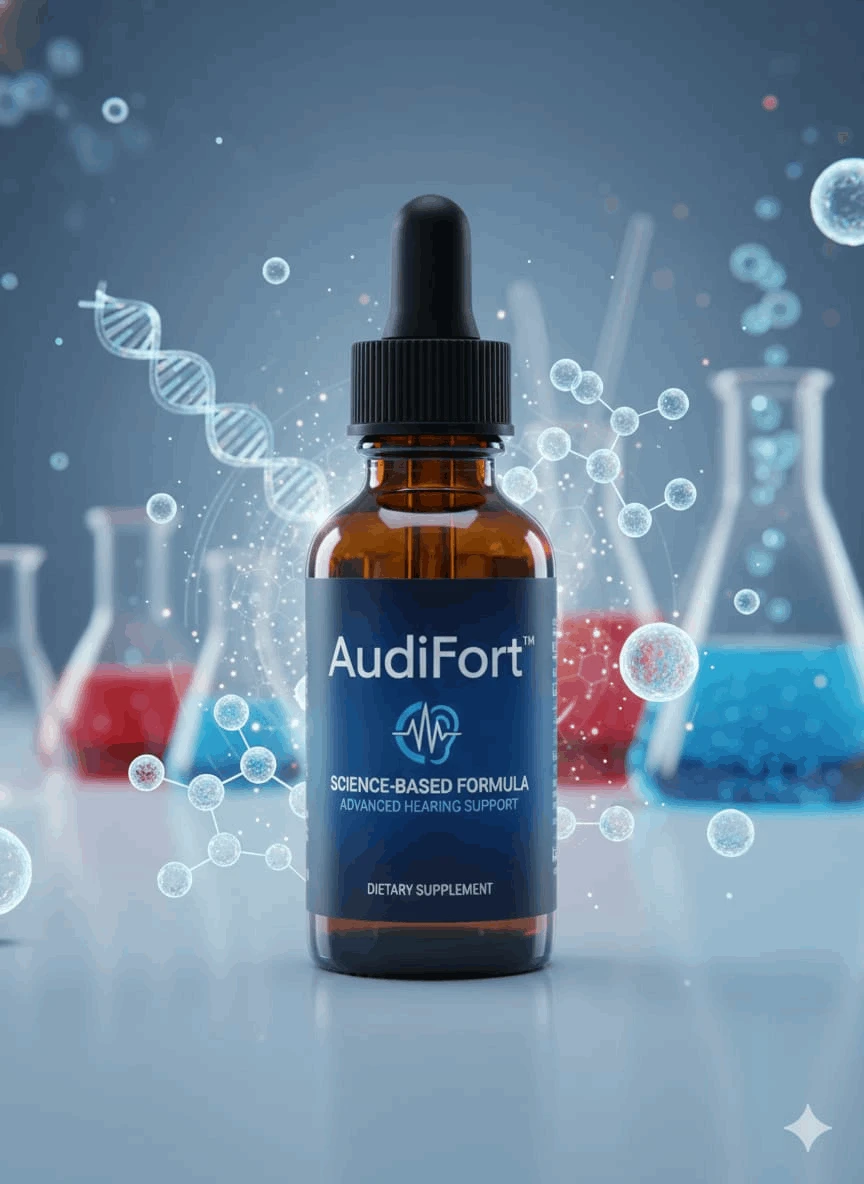
Does Audifort work for tinnitus?
There is no evidence that it does, because no published study has ever tested it — for tinnitus or for anything else. That is not the same as proof it fails, but it does mean anyone telling you it works for tinnitus is stating something no one currently knows. Tinnitus also happens to be one of the hardest targets in this field.
Why the answer has to be "unknown"
Three claims get confused in this space, and separating them settles most of the argument. “This ingredient has been researched” is often true. “This ingredient helps tinnitus” is usually not established. “This product helps tinnitus” requires a trial of the product, which does not exist here.
A confident yes would be fabrication. A confident no would overstate what absence of evidence proves — untested is not the same as disproven. The accurate position is uncertainty, and it is the only one the record supports.
Why tinnitus is unusually hard to treat
Tinnitus resists treatment for a structural reason. It is generated centrally in most cases: reduced input from a damaged cochlea leads the auditory system to raise its own gain, and that over-activity is perceived as sound.12 The generator is neural plasticity, not a lesion you can target.
An oral supplement is a systemic, peripheral intervention. To affect a central process it would need to be absorbed, reach the brain in meaningful quantity, act on the relevant circuits, and do so enough to change perception. Each step is a real hurdle. GABA illustrates the problem neatly: it is exactly the neurotransmitter the gain model implicates, and how much of an oral dose reaches the brain remains unresolved.3
What would need to be true
For a confident yes, four things would have to hold, and none currently does:
- A published trial of the finished product — randomised, placebo-controlled, using a validated tinnitus outcome measure. None exists.
- Disclosed doses matching amounts shown to do something. No Supplement Facts panel with individual amounts is public.
- A plausible route to the target, meaning evidence that the active components reach central auditory circuits. Unresolved.
- Replication, because a single positive trial in a symptom this placebo-responsive is a starting point rather than a conclusion.
The precedent worth knowing
Ginkgo biloba has been studied for tinnitus more than any other supplement ingredient, over decades and across many trials. Cochrane’s 2022 systematic review concluded the evidence was too uncertain to establish a benefit for tinnitus loudness or severity.4
That is the ceiling this category has reached with its best-studied candidate. A blend that has never been tested, whose doses are unpublished, should be expected to do no better. A randomised placebo-controlled trial of antioxidant supplementation in people with tinnitus does exist,5 testing a different preparation, and broader antioxidant meta-analysis in sensorineural hearing loss has produced mixed and modest results.6
What does have evidence behind it
Tinnitus is not untreatable — the effective approaches simply work on the central side rather than through the bloodstream. Cognitive behavioural therapy for tinnitus has the strongest evidence base for reducing distress and interference with daily life. Sound therapy and enrichment reduce the contrast between the tinnitus and a quiet environment. Where hearing loss is present, properly fitted hearing aids often reduce tinnitus intrusiveness by restoring input — consistent with the gain model. A large randomised trial found benefit from hearing intervention in older adults with hearing loss.7
Managing sleep, stress and noise exposure matters too, since all three modulate how intrusive the sound feels. None of this is as convenient as a dropper, which is precisely why supplement marketing has the audience it does.
If you decide to try it anyway
That is a reasonable choice made with open eyes, and a few things make it a better-run experiment. Get your hearing tested first, because an audiogram is genuinely useful information and may point to an intervention with actual evidence. Establish a two-week baseline rating before starting. Note the refund deadline in a calendar on the day you order. Change one variable at a time. And do not stop or delay anything a clinician has recommended in order to try it.
What "working" would even look like
It is worth being concrete, because vague expectation is what makes disappointment and false confidence equally likely. Tinnitus outcomes in research are usually measured as a change in how much the sound intrudes on daily life, not as elimination. A clinically meaningful improvement on a validated index is a real but modest shift — the noise becoming easier to ignore, less intrusive in quiet rooms, less disruptive at bedtime.
Almost nobody in a successful tinnitus trial reports silence. If your expectation of “working” is that the sound stops, no intervention currently available reliably delivers that, and a supplement certainly does not. Calibrating what success would mean before you start is the difference between a fair test and a foregone conclusion.
The cost of waiting
There is one risk in this decision that has nothing to do with the formula. Trying a supplement for three or six months is not neutral if it postpones an assessment, because some causes of tinnitus are time-sensitive.
Sudden hearing loss is the clearest example: current clinical guidance treats it as an emergency, and outcomes depend substantially on how quickly treatment begins.8 One-sided tinnitus and pulsatile tinnitus both warrant examination for reasons that have nothing to do with nutrition. If any of those describe you, order the appointment first and the bottle second, in that order.
Related Audifort pages
- what tinnitus is — the condition explained and how the product is positioned
- the tinnitus formula reviewed — ingredient by ingredient against tinnitus
- why tinnitus testimonials mislead — the four effects that fake improvement
- the broader efficacy question — what the evidence shows beyond tinnitus
Frequently asked questions
Does Audifort work for tinnitus?
There is no evidence that it does, because no published study has tested the finished product for tinnitus or any other outcome. That is not proof that it fails, but nobody currently knows, and claims of certainty in either direction go beyond the record.
How long would Audifort take to work for tinnitus?
No trial exists from which to derive a timeline, so any figure quoted is a marketing projection. If you try it, set your own review date and note the refund deadline at the point of purchase.
Can any supplement stop tinnitus?
None has been shown to reliably do so. Ginkgo biloba has been studied more than any other ingredient in this category and Cochrane found the evidence too uncertain to establish a benefit for tinnitus loudness or severity.
Why is tinnitus so hard to treat?
Because it is usually generated centrally rather than in the ear. Reduced input from a damaged cochlea leads the auditory system to increase its own gain, and that over-activity is perceived as sound. An oral supplement is a peripheral intervention aimed at a central process.
What actually helps tinnitus?
Cognitive behavioural therapy for tinnitus has the strongest evidence for reducing distress, alongside sound therapy and, where hearing loss is present, properly fitted hearing aids. Managing sleep, stress and noise exposure also affects how intrusive it feels.
References
Each verified against its PubMed record or issuing body. The complete source list is on the main Audifort guide.
- Shore SE, et al. Maladaptive plasticity in tinnitus: triggers, mechanisms and treatment. Nat Rev Neurol. 2016. PMID 26868680
- Salvi R, et al. Inner hair cell loss disrupts hearing and enhances central auditory gain. Front Neurosci. 2016. PMID 28149271
- Lu WY. Supplementation of gamma-aminobutyric acid as a functional nutrient. Nutrients. 2026. PMID 42514458
- Sereda M, et al. Ginkgo biloba for tinnitus. Cochrane Database Syst Rev. 2022. PMID 36383762
- Petridou AI, et al. Antioxidant supplementation in patients with tinnitus: a randomised, double-blind, placebo-controlled trial. Nutrients. 2019. PMID 31842394
- Souza MEDCA, et al. Antioxidant supplementation and auditory threshold in sensorineural hearing loss. Braz J Otorhinolaryngol. 2018. PMID 28888754
- Lin FR, et al. Hearing intervention versus health education control (ACHIEVE). Lancet. 2023. PMID 37478886
- Chandrasekhar SS, et al. Clinical practice guideline: sudden hearing loss (update). Otolaryngol Head Neck Surg. 2019. PMID 31369359
Trust & legal
FDA statement. These statements have not been evaluated by the Food and Drug Administration. This product is not intended to diagnose, treat, cure or prevent any disease.
Disclosure. This site contains links; we may earn a referral fee at no additional cost to you. Content is educational only and is not medical advice.
© 2026 aeudifort.com. All rights reserved.